Remembering the victims of Ratko Mladić’s crimes
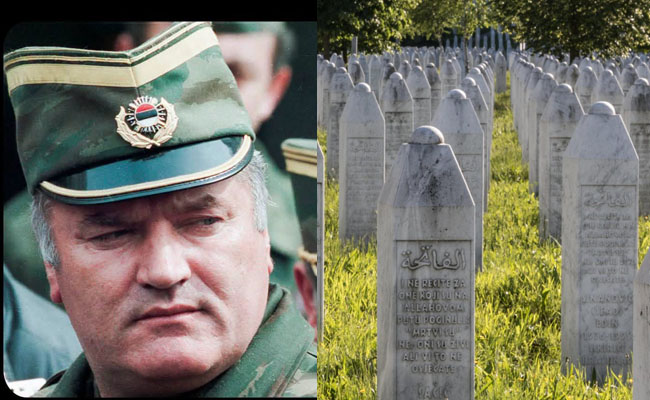
London: Today, there is much focus on convicted war criminal Ratko Mladić following news of his death in prison. But today, as always, our focus must remain on his victims, their families and the survivors of the worst genocide in Europe since the Second World War, carried out under his command.
Around 8,000 Muslim men and boys were murdered in Srebrenica alone. Across Bosnia and Herzegovina, tens of thousands of women were subjected to rape and sexual violence, while thousands of people were subjected to ethnic cleansing, including in concentration camps and during the years-long siege of Sarajevo. More than two million people were displaced by the war.
To this day, mothers and families continue to search for the remains of their loved ones.
Munira Subašić, President of the Association of Mothers of Srebrenica and Žepa, said:
“We have survived to see the death of the war criminal who ordered the killing of our children; may divine justice judge him. Thirty-one years on, our pain is the same. We are still searching for our children’s remains, and we will never give up our pursuit of truth and justice.
” There can be no place for the glorification of Mladić, nor for the genocide and ethnic cleansing carried out under his command. Those who continue to celebrate or defend him perpetuate the hatred and division that fuelled the Bosnian genocide and continue to inflict pain on survivors and their families.
Dr Waqar Azmi OBE, Chair of Remembering Srebrenica, said:
“His legacy is not one of heroism, but of shame: a dark reminder of the depths of human cruelty, the devastating cost of hatred and the consequences of dehumanising others. He sought to destroy the peaceful coexistence of the people of Bosnia and Herzegovina and to tear apart communities that had lived alongside one another for generations.
“The search for justice continues. We will continue to provide a space for survivors to tell their stories, honour those who were lost, and keep our focus where it belongs: with the victims, their families and the survivors.
“And we will continue to challenge those who dehumanise others and promote hatred and division, because confronting these forces is essential to building a better, safer and more cohesive society for everyone.”