Need Comprehensive Dialogue in Azad Kashmir

Public dissatisfaction in Azad Kashmir has been steadily rising, signaling a need for urgent and focused intervention. The growing unrest reflects widespread concerns among the population, underscoring the importance of addressing these issues promptly through dialogue and deliberation.
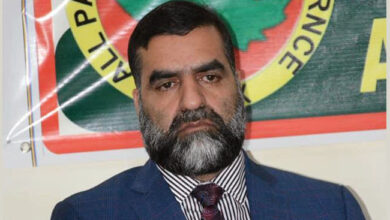
Dr. Ghulam Nabi Fai Chairman
World Forum for Peace & Justice
June 10.2026.
In an era when political narratives often seek to divide people along territorial and ideological lines, it is important to remember that the bonds that unite the people of Indian occupied Kashmir and Azad Kashmir have remained remarkably resilient. These ties are rooted not merely in geography, religion, or politics, but in a shared history, culture, and collective aspiration for dignity and peace.
My first visit to Pakistan and Azad Kashmir in 1977 left an indelible impression on my mind. During that journey, I had the privilege of meeting some of the most respected political, religious, and intellectual leaders of the time. They included Sardar Abdul Qayyum Khan, President of Jammu Kashmir Muslim Conference; K.H. Khurshid, President of Jammu Kashmir Liberation League; Moulana Abdul Bari, President, Jamaat-e-Islami, Azad Kashmir, Abdul Khaliq Ansari, President of Mahaz Rai Shumaree; Abdul Samad Wani, Editor in Chief, Kasheer, Mir Abdul Aziz, Editor, Insaaf, G.M. Mir, G.M. Lone, Dr. Farooq Haider who played a pivotal role as the intellectual force behind Jammu Kashmir Liberation front. His vision and leadership were instrumental in shaping the party’s direction during a period of profound change. More importantly, I had the opportunity to interact with ordinary people as well whose affection for their brethren across the Ceasefire Line was both sincere and profound.
What struck me most was not the political discourse of the day, but the recurring question posed by countless individuals: “How can we help our people in Jammu and Kashmir?” It was a question that reflected neither political expediency nor diplomatic calculation. Rather, it was an expression of genuine concern for fellow Kashmiris who were facing uncertainty and hardship.
That sentiment remains one of the defining characteristics of Azad Kashmir. For decades, its people have demonstrated an unwavering commitment to the welfare of Kashmiris on the other side of the divide. Their support has transcended party affiliations and ideological differences. Whether through advocacy, or moral support, they have consistently sought to keep the Kashmir issue alive in public consciousness.
Equally important is the regard in which the people of Azad Kashmir have been held by leaders of the Kashmiri resistance and political movement. Figures such as Syed Ali Geelani, Mohammad Yasin Malik, Shabir Ahmad Shah, and many others recognized that the people of Azad Kashmir occupied a unique position. Living in an environment where they could organize, mobilize, and advocate freely, they became natural ambassadors of the Kashmiri cause on the international stage.
Lately, since 2024, the people of Azad Kashmir have been demanding not privileges but responsive governance, economic justice, and respect for their democratic rights. Their voices deserve to be heard. At the same time, any reform undertaken in the name of democracy must not inadvertently weaken the political and constitutional foundations of the Kashmir cause. The challenge before Azad Kashmir’s leadership is therefore twofold: to address the immediate concerns of its citizens while preserving the principles that have historically united Kashmiris across all regions of the former State of Jammu and Kashmir. Statesmanship requires achieving both objectives simultaneously.
The roots of the present unrest can be traced to the economic crisis that intensified in 2024. Faced with large-scale protests and strikes, the AJK government acknowledged the legitimacy of several demands raised by the Awami Action Committee (AAC) and announced a series of measures aimed at easing public hardship. These included subsidies on flour, reductions in electricity rates to reflect local hydropower generation costs, and steps to curtail certain privileges enjoyed by members of the ruling elite. To support these commitments, a financial package estimated at twenty-three billion rupees was approved.
While these measures temporarily reduced tensions, the controversy did not disappear. Many activists and community leaders contend that implementation of the promised reforms has been incomplete or excessively delayed. Their dissatisfaction reflects a broader challenge faced by governments everywhere: public confidence depends not merely on promises but on timely and visible action.
The latest phase of the movement has expanded beyond economic concerns. In 2025, the AAC presented a comprehensive charter containing thirty-eight demands. Among the most consequential is the proposal to abolish the twelve reserved seats in the Azad Jammu and Kashmir Legislative Assembly allocated to Kashmiris residing in Pakistan, particularly those originating from Jammu and the Kashmir Valley.
Supporters of this proposal argue that these seats distort democratic representation by granting legislative influence to individuals who do not reside within Azad Kashmir. They maintain that elected institutions should primarily represent the people who live in and directly experience the consequences of governance in the territory.
This argument deserves consideration. Democratic systems derive legitimacy from representation, accountability, and the consent of those governed. Any institutional arrangement that appears inconsistent with these principles will naturally invite scrutiny and debate.
However, there is another dimension that cannot be ignored. The reserved migrant seats were not created merely as a political accommodation; they were established to acknowledge the continuing stake of displaced Kashmiris from Jammu and the Kashmir Valley in the future of the State of Jammu and Kashmir. These communities, despite living outside Azad Kashmir, remain an integral part of the broader Kashmiri national narrative. The reserved seats reinforce the long-standing constitutional position that the State of Jammu and Kashmir remains a disputed territory whose final status has yet to be determined in accordance with the aspirations of its people.
The sanity should have prevailed. Dialogue should have been initiated. The principle of pursuing dialogue in difficult circumstances should have guided the recent events in Azad Kashmir. Initiating constructive conversations could have prevented escalation and fostered mutual understanding among stakeholders. Pakistan has consistently demonstrated to the international community that open negotiations and dialogue are possible, even in extreme situations. This commitment to engagement has earned widespread recognition and praise for Pakistani authorities, both civilian and military, who have chosen to resolve conflicts through dialogue rather than confrontation.
Given Pakistan’s proven ability to bring together conflicting parties in situations that once seemed impossible, a question arises: why was this successful technique not employed in Azad Kashmir? If dialogue has previously bridged deep divides, it stands to reason that similar methods could have helped address the deadlock surrounding the abolition of seats and other demands. The absence of such an approach in Azad Kashmir remains a point of concern and reflection.
Many Americans of Azad Kashmir ancestry have expressed deep anguish and concern over recent events, reaching out to me to share their distress. During these conversations, individuals have recounted incidents that have profoundly affected their communities. In one particularly tragic case, a neighbor was reportedly shot dead at close range, leaving local families in shock and grief.
These incidents have prompted members of the Kashmiri diaspora, especially those from the Valley to question Pakistan’s stance on human rights. They ask how Pakistan can advocate for human rights violations in Jammu and Kashmir when civilians have also lost their lives in Azad Kashmir. This sentiment underscores the need for consistent and transparent approaches to addressing human rights issues, regardless of the region.
It is important to recognize that India may seek to capitalize on the tense situation in Azad Kashmir. If the sentiments of the people in Azad Kashmir are neglected, India could use this opportunity to highlight the issue in major world capitals. This would undermine Pakistan’s position, as it would be difficult to justify protests or objections. In other words, the principle that “what is good for the goose may also be good for the gander” could apply, meaning that actions taken by one party may set a precedent for the other.
If the current issues in Azad Kashmir are not resolved, there is a strong belief that this will have disastrous consequences for the disputed territory of Jammu & Kashmir. Those who are committed to advancing the cause of Jammu & Kashmir within the international community risk losing a significant ally if the crisis continues without resolution.
In nutshell, Azad Kashmir stands at an important crossroads. The path forward requires not only addressing immediate economic grievances but also safeguarding the constitutional foundations and historical principles that have long defined the Kashmiri struggle. Lasting stability will come not through confrontation, but through inclusive dialogue, responsible governance, and a shared commitment to justice and democratic accountability.
Dr. Fai is also Secretary General World Kashmir Awareness Forum.
He can be reached at: WhatsApp: 1-202-607-6435
gnfai2003@yahoo.com