When Roads Open, Destinations Draw Nearer: AJK Must Now Move from Protest to Dialogue, Implementation and Reconstruction
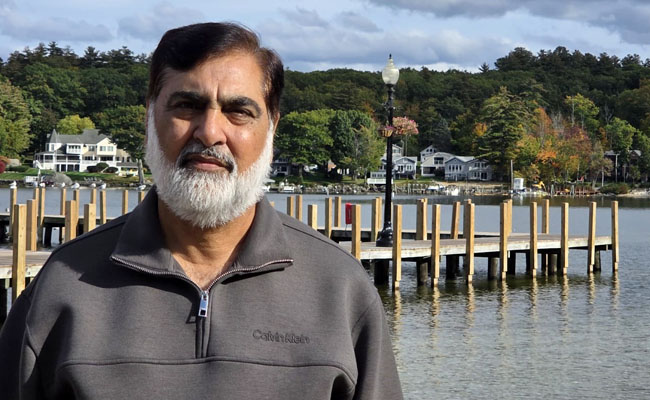
By: Farhat Ali Mir (Former Bureaucrat)
The recent administrative and political situation in Azad Jammu and Kashmir has once again confronted us with a fundamental question: how can a balance be established between the legitimate struggle for public rights, the responsibilities of the State, and the ordinary citizen’s right to live, work, travel, study and conduct business without disruption? Months of protests, sit-ins, road blockades, interruptions to educational activities, and the disruption of commercial and social life have transformed the situation from a matter of protest alone into a much larger question of governance. The real issue now is no longer simply what demands were raised, but how those demands can be translated into workable decisions, clear timelines and verifiable outcomes.
This is precisely the point at which the phase after protest must begin – the phase of dialogue, negotiation, implementation and reconstruction. Addressing the oath-taking ceremony of the newly elected members of the Azad Jammu and Kashmir Council on October 6, Prime Minister Shehbaz Sharif assured the people of Azad Kashmir of the Federal Government’s full cooperation in the region’s development and prosperity.
He described (once again) the AJK Council as a bridge between Azad Kashmir and Pakistan and said that the Federal Government would mobilise available resources for development, while efforts would be made to provide education, healthcare and basic services closer to the people.
He also urged the President and Prime Minister of Azad Kashmir to exercise their constitutional responsibilities and resolve public issues through consultation and mutual cooperation.
The Prime Minister also emphasised the importance of respecting decisions and legislation emerging from the newly elected Assembly through consensus or majority. He referred to the recent unrest with regret and recalled that efforts had been made to persuade the concerned groups to resolve their grievances through dialogue. These statements offer an important political and democratic opening.
The task now is to ensure that the street and the Assembly do not become alternatives to one another, but complementary parts of a functioning democratic system. The Right to Protest and the Right to Live Normally: In a democratic society, dissent is indispensable. Questioning the government, demanding rights, presenting grievances and engaging in peaceful protest are fundamental civic freedoms. But another principle is equally important: if the purpose of a movement is to protect the rights and welfare of ordinary people, its methods must also remain mindful of the public interest.
When roads remain blocked for prolonged periods, schools are forced to close, businesses suffer, patients face difficulty reaching hospitals, students lose valuable educational time, workers and traders lose income, and ordinary travellers are stranded, the consequences of protest extend far beyond the government or the institutions being challenged. Society as a whole begins to bear the cost. The question, therefore, is not directed against any particular political group. It is a question in support of the very public interest for which the struggle is being waged: Should the next phase of a movement for public rights not also be about reducing the hardships faced by the public itself? The answer should be yes. The legitimacy of a public movement is strengthened – not weakened – when it protects both the right to protest and the right of ordinary citizens to carry on with their lives.
From Demands to Results: The Joint Awami Action Committee’s (Proscribed) movement in Azad Kashmir brought a wide range of issues to the forefront, including electricity, education, healthcare, employment, government expenditure, official privileges, basic services and the use of public resources.
These demands generated a serious public debate and compelled governments to respond. The Government stated in June 2026 that 35 of the 38 demands presented by the banned JAAC had been implemented, while the government remained willing to discuss the outstanding matters.
The government also said that some of the unresolved questions – particularly those involving constitutional and legal matters required consideration through appropriate political and judicial forums. The JAAC and other public voices, however, have continued to question the pace, scope and completeness of implementation. This is precisely why the next step should be neither competing claims nor competing press conferences. It should be a joint, publicly accessible implementation record. Which demand has been fully implemented? Which is partially implemented? Which remains under process? Which requires additional financial resources? Which is constrained by law or the Constitution? Which requires legislation by the elected Assembly? And which issues genuinely require further negotiation? The government should publish a detailed progress report addressing these questions.
The public deserves to know what has been done, what remains to be done, who is responsible, and by what date the remaining work is expected to be completed. Transparency builds trust. Ambiguity breeds mistrust. The JAAC Now Faces Its Most Important Test:
The Joint Awami Action Committee played an important role in bringing public grievances to the forefront and placing them before the authorities. Its mobilisation demonstrated that unresolved public concerns cannot simply be ignored. But every successful public movement ultimately faces a question beyond mobilisation: What comes after the protest? A movement’s strength is not measured only by the number of people it can bring onto the streets. Its enduring achievement lies in whether it can convert public pressure into durable institutional change. The JAAC has reached that decisive moment. If the government is willing to negotiate, the opportunity should be seized.
Negotiation does not mean surrendering demands. It does not invalidate a struggle. Nor does it diminish the importance of the movement. On the contrary, negotiation is the stage at which demands can be transformed into written commitments, legislation, budgetary allocations, institutional reforms and measurable timelines. Where a demand can be resolved through negotiation, it is more productive to resolve it at the negotiating table than through prolonged confrontation. Where a question is constitutional or legal, it should be taken to the relevant constitutional and judicial forums. Where a demand requires legislation, the elected Assembly should be allowed and expected to perform its constitutional role.
This is not a retreat from democratic struggle. It is the institutionalisation of democratic struggle.
From the Street to the Assembly: Azad Kashmir has now held its general elections. A new Legislative Assembly has emerged and elected representatives have taken their oaths. This creates a new democratic pathway for public demands.
The power of public mobilisation should now be connected to the Assembly’s functions of legislation, oversight and accountability.
Demands requiring legislation should go before the Assembly.
Administrative demands should be assigned deadlines.
Demands requiring financial resources should be incorporated into budgets and development programmes.
Constitutional questions should be taken to the appropriate forums. In this way, the voice of protest does not disappear. It enters a new phase. That is the real strength of democratic politics: a voice raised in the street can ultimately become a law, a policy, a budgetary decision or an institutional reform in the Assembly. The road from protest to Parliament or, in the case of Azad Kashmir, from protest to the elected Assembly is not a road of surrender. It is the road from pressure to policy.
A Lesson from Other Countries: There is nothing unusual or undemocratic about ending a prolonged confrontation through negotiation. Indeed, some of the most consequential political settlements of recent decades demonstrate that dialogue becomes most valuable precisely when confrontation has reached its limits. In Ecuador in 2019, nationwide protests erupted after the government removed fuel subsidies.
The demonstrations paralysed roads and economic activity and lasted for almost two weeks. Eventually, President Lenín Moreno and indigenous leaders entered direct talks facilitated by the United Nations and the Catholic Church. The government agreed to withdraw the disputed decree, while protest leaders agreed to end the mobilisation and road blockades. The two sides also agreed to work together on alternative economic measures.
The lesson for Azad Kashmir is not that every demand in every dispute can be settled in the same way. The lesson is simpler: when confrontation begins to impose heavy costs on society, a credible negotiating table can provide a pathway from paralysis to a workable compromise. India’s 2020–21 farmers’ movement offers another instructive example. Tens of thousands of farmers maintained a prolonged protest against agricultural reforms. The government and farmer unions held repeated rounds of talks. Eventually, after the government announced the repeal of the three controversial farm laws and provided written assurances on several outstanding demands, the farmers called off their year-long agitation. Again, the relevance is not in the substance of the Indian dispute but in the mechanism: a prolonged street movement ultimately moved towards written commitments, institutional decisions and an agreed exit from the protest.
A much broader historical example is Northern Ireland. The Good Friday Agreement of 1998 did not emerge from the disappearance of grievances or from one side defeating the other. It followed years of conflict, political engagement, negotiation, compromise and international involvement. The agreement established a new political framework based on power-sharing and consent and helped end a cycle of violence that had persisted for decades. The message from such experiences is clear:
Dialogue is not the opposite of resistance. At its best, dialogue is the mechanism through which resistance is converted into reform. The Democratic Cost of Prolonged Disruption:
There is another reason why the present moment demands urgency.
The disruption in Poonch and surrounding areas has had consequences beyond roads and markets. The 2026 AJK legislative elections were conducted in phases amid unrest. Voting in seven constituencies – five in Poonch and two in Sudhnoti – was postponed on security grounds.
The Election Commission said Poonch Division had 1,154,626 registered voters across its 11 constituencies; voting in four constituencies involving 460,371 voters proceeded separately, while the remaining seven constituencies were delayed. This is not a minor administrative inconvenience. An election is one of the most fundamental expressions of democratic citizenship. When citizens are unable to cast their votes on the scheduled day and an elected legislature cannot initially be constituted in full, the democratic cost becomes substantial.
That should concern everyone: the government, political parties, civil society and the protest leadership alike. The purpose of political struggle cannot ultimately be to weaken the very representative institutions through which public grievances can be converted into law and policy. The right to protest and the right to vote must reinforce each other, not collide with each other. The Government’s Responsibility Is Equally Serious: None of this means that the burden of responsibility lies only with the JAAC.
Negotiations succeed only when both sides approach them with seriousness, credibility and a willingness to honour commitments. If the government offers dialogue, it must demonstrate that dialogue is not merely a device for buying time or lowering temporary political pressure. It must be a genuine mechanism for solving problems. The government should therefore:
publish a comprehensive implementation report on the agreed demands;
establish clear priorities and deadlines for the remaining issues;
refer constitutional and legal questions to the appropriate forums; involve elected representatives and relevant stakeholders in monitoring implementation;
provide regular public updates on progress;
establish a formal negotiating mechanism in which responsibilities and deadlines are clearly defined; and
create an institutional system for reviewing unresolved matters rather than allowing every disagreement to return to the streets. Such a framework could help restore public confidence and provide an institutional channel for future disagreements. The Federal Government’s Assurance and Its Real Test: Prime Minister Shehbaz Sharif has once again assured Azad Kashmir of federal support for development, prosperity and basic public services. He has said that available resources will be mobilised and that education, healthcare and other basic facilities should reach people at their doorsteps. The importance of such assurances is undeniable. But their real test will not be in speeches. It will be visible on the ground.
The people of Azad Kashmir need roads, reliable electricity, functional hospitals, quality schools, employment opportunities and a stronger local economy. The AJK government, in turn, must convert federal support into effective planning, good governance, transparent spending and measurable outcomes.
The responsibility, therefore, is not one-sided. The Federal Government must provide resources and support. The AJK Government must use them according to clear priorities. The elected Assembly must legislate and exercise oversight.
And public leadership must help transform demands into negotiated and institutional outcomes. What Do Ordinary People Actually Want? For ordinary citizens in Poonch, Sudhnoti, Kotli and other parts of Azad Kashmir, the priorities are perhaps not particularly complicated. They want better roads.
They want reliable electricity. They want hospitals where doctors, medicines and essential services are actually available. They want continuous and quality education for their children. They want employment, skills and economic opportunities for their young people. They want an environment in which markets, transport and local businesses can function without unnecessary disruption. And above all, they want a society where they can question the government, disagree with it and peacefully protest against it —without their daily lives being unnecessarily paralysed. This is precisely where public rights and public welfare meet.
Let Public Receptions Become Public Engagement: Visits by the President of Azad Kashmir to different areas, or the enthusiastic receptions accorded to the Prime Minister of Azad Kashmir in places such as Kotli, Sehnsa and Gulpur, should not remain merely ceremonial or political spectacles.
The real value of public contact begins when the issues raised by citizens become part of the government’s working agenda. If such engagement results in better roads, more reliable electricity, improved healthcare, functioning educational institutions, meaningful educational reform and greater employment opportunities for young people, then a public reception becomes something more than a political event. It becomes genuine public engagement. A reception lasts a few moments.
Good governance can shape generations. The Road as a Metaphor: In the present circumstances, the closing and reopening of roads has become a powerful metaphor for the wider crisis. It is relatively easy to close a road. Opening it again requires patience, trust, dialogue and mutual confidence. The same principle applies to political and social life. When there is disagreement, the road to dialogue must remain open. When there is a demand, the door to negotiation must remain open.
When an agreement is reached, the route to implementation must be clearly defined. And when disagreement remains, it should be taken to constitutional, legal and democratic institutions rather than allowed to develop into another cycle of confrontation. Roads are not merely for transportation.
They connect communities. Political dialogue does the same. No More Confrontation: Now for a Meaningful Consensus. Azad Kashmir needs an agreement more than it needs another confrontation. It needs a consensus in which public rights are protected, government responsibilities are fulfilled, the rule of law is maintained, peaceful protest remains a recognised democratic right, legitimate public organisations are treated with respect, and the development process continues without unnecessary interruption. The government and public leadership must begin to see each other not as permanent adversaries, but as stakeholders in solving a common problem. The government must accept its responsibilities.
Public leaders must carry their struggle into a result-oriented phase. The elected Assembly must strengthen and exercise its constitutional role.
And the Federal Government must turn its announced financial, administrative and developmental support into concrete projects. It must also be recognised that not every demand can be fulfilled immediately.
But every legitimate demand can be heard. Not every problem can be solved in a day. ⁰⁰But a credible route to solving every legitimate problem can be identified. That is the foundation of reasonable politics and responsible governance. The Real Question: When Will the People Win?
Perhaps the most important question today is not who won and who lost. The real question is:
When will the people win? The people will win when demands become practical programmes.
When promises become measurable results. When agreements leave the pages of documents and become visible on the ground.
When protest leads to reform rather than confrontation. When public demands are treated by governments not merely as law-and-order challenges but as priorities of governance. When roads are used for travel rather than obstruction.
When schools remain open. When patients can reach hospitals in time. When markets and businesses can function without unnecessary closures. When young people have not merely slogans in their hands, but skills, opportunities and jobs. And when the central question of politics in Azad Kashmir becomes:
How can the lives of ordinary people be made better? The prolonged protests in Poonch and the difficulties they have created have offered an important lesson: public movements derive their real strength from public confidence. That confidence can endure only when a movement’s path also leads towards reducing the hardships faced by the people in whose name it speaks. The government, too, has a clear lesson to learn. Ignoring public grievances is never a sustainable strategy.
Listening in time, negotiating seriously, reaching credible agreements and then implementing them transparently is the real foundation of public trust. Now that Azad Kashmir has a newly elected Assembly, and the Federal Government has renewed its commitment to development, prosperity, consultation and the resolution of public problems, an opportunity exists to take public demands into a new phase.
Prime Minister Shehbaz Sharif’s recent emphasis on respecting legislation and decisions emerging from the elected Assembly also points towards this democratic direction. The time has come for Azad Kashmir to move from protest to dialogue, from confrontation to reconciliation, and from demands to measurable results. Let the roads be opened. Let the doors of dialogue remain open. Let the elected Assembly perform its constitutional role. Let agreements be implemented. I began began and I And let the energy of public mobilisation be transformed into the force of reconstruction, development and prosperity.
Because the real success of any society does not lie in eliminating disagreement.
Its real success lies in ensuring that, despite disagreement, institutions continue to function, citizens remain secure, rights are respected and the journey of development continues. The people of Azad Kashmir need something far more important than the victory of one side over another. They need an improvement in their lives. And that is where the government, the Federal Government, the elected Assembly, political leadership, public organisations and ordinary citizens ultimately share one destination: a peaceful, dignified, stable and prosperous Azad Kashmir. When the roads open, the journey becomes easier – and the destination comes closer. Insha’Allah.