January: A Month of Tragedy for Kashmir
Dr. Ghulam Nabi Fai Chairman World Forum for Peace & Justice
January 22, 2026: January should have been a month of hope for the people of Kashmir. It was in January 5, 1949 when the United Nations established that the final status of the State of Jammu and Kashmir shall be determined in accordance with the will of the people, expressed through a free and impartial plebiscite conducted under the auspices of the United Nations.
And again in January 24, 1957 the United Nations Security Council reaffirmed that any action that (Kashmir) assembly may have taken or might attempt to take to determine the future shape and affiliation of the entire State or any part thereof, or action by the parties concerned in support of any such action by the assembly, would not constitute a disposition of the State in accordance with the above principle.”
Yet, for Kashmiris, January has instead become a month of mourning—a recurring reminder of unfulfilled promises and unpunished crimes. which establishes that the final status of the State of Jammu and Kashmir shall be determined in accordance with the will of the people, expressed through a free and impartial plebiscite conducted under the auspices of the United Nations,
The most catastrophic of these tragedies occurred on January 21, 1990, at Gawkadal Bridge in Srinagar. On that day, the Central Reserve Police Force (CRPF) opened fire on peaceful demonstrators protesting the imposition of Governor’s Rule under Jagmohan—widely remembered by Kashmiris as the “Butcher of Kashmir.” Hundreds of unarmed protesters were trapped on the bridge as security forces cordoned it off from both sides and fired indiscriminately. With no avenue of escape, many people jumped into the icy waters of the Jhelum River.
Women, children, students, and passersby were among the dead. At least 50 civilians were killed, though eyewitnesses and survivors believe the actual toll was much higher. No independent judicial inquiry was ever conducted. No official was held criminally accountable. The case was quietly closed, records were destroyed, and justice was denied to the victims. This is the lived reality of Kashmir.
The Daily Kashmir Times quoted Manohar Lal, a Kashmiri Pandit residing near the Gawkadal area, who recalled: “Everyone was wailing, and blood was all around.” He added that many of those who sustained bullet injuries cried out in agony, and some even died in boats while being transported to hospitals. “I participated in the demonstration,” he said, “to register my silent protest against what happened before my eyes.”
Speaking to Kashmir News Agency, Manohar Lal further recounted how he heard the thuds of bullets from inside his home. “Then there were screams and cries. I peeped through my window, and what I saw still traumatizes me. I continue to suffer sleepless nights whenever I recall that incident.”
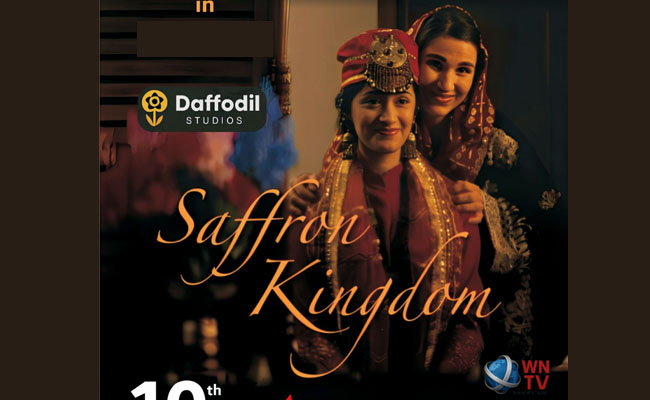
The documentary Saffron Kingdom, made by Arfat Sheikh, a Kashmiri-American filmmaker, powerfully documents the Gawkadal massacre and offers an essential, firsthand account that deserves to be seen by anyone seeking to understand the full scale of the tragedy.
The violence did not end there. On January 22, 1990, just one day after the Gawkadal massacre, ten more civilians were killed at Alamgari Bazar in Srinagar while protesting the killings at Gawkadal.
This was followed by the Handwara massacre on January 25, 1990, when 21 Kashmiri civilians were killed by the Border Security Force (BSF). Thousands had poured into the streets of Handwara to express solidarity with the people of Gawkadal and to demand accountability and justice. Eyewitnesses described scenes of horror—bodies lying motionless on the ground, survivors scrambling desperately to escape the gunfire.
January’s trail of blood continued in later years. On January 27, 1994, the Kupwara massacre claimed the lives of 27 innocent civilians. In the days preceding India’s Republic Day on January 26, soldiers of the Punjab Regiment warned local residents that they must participate in official celebrations or face consequences. Defying these threats, the people of Kupwara observed a complete shutdown. The following day, as shopkeepers reopened their businesses, Indian soldiers opened fire from multiple directions, killing at least 27 civilians.
Earlier, on January 6, 1993, the town of Sopore, known as the heart of Kashmir’s apple industry, witnessed another massacre. The BSF opened indiscriminate fire in the main bazaar, killing 43 civilians. Shopkeepers were prevented from fleeing; some were burned alive inside their shops. More than 250 shops and 50 homes were reduced to ashes.
Again, on January 19, 1991, 14 civilians were killed at Magarmal Bagh in Srinagar by the Central Reserve Police, some while they were inside their own shops.
Where is accountability? Where is the UN Charter? Where is the respect for UN Security Council resolutions that promised the people of Kashmir the right to decide their own future? These are the questions being asked today by the youth of Kashmir.
If the United Nations wishes to retain its credibility, then powerful states—including India—must be held accountable under international law. They must answer why justice has been systematically denied, and why UN resolutions—accepted by India itself—remain unimplemented.
The people of Kashmir ask for nothing more, and nothing less, than what was promised to them: the right to decide their own future.
History will judge not only those who committed these crimes, but also those who remained silent.
Dr. Ghulam Nabi Fai is also the Secretary General
World Kashmir Awareness Forum. He can be reached at:
WhatsApp: 1-202-607-6435 / gnfai2003@yahoo.com
Kashmirawareness.org